Saturday, July 30, 2011

Atlast after 63 years of Independence Indian Children get Right To Education
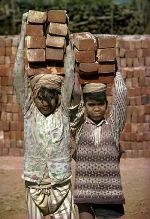

 Better late than never - this is what we can say about the recently approved Right To Education bill. India got independence on 15th Aug, 1947 and today is 3rd april , 2010 means it took 63 years for our democratic politicians to introduce a bill which deserves to be the first bill of Independent India. Any how at least now a positive move has been made and it is highly commendable.  
The landmark law which makes education a fundamental right for all children between six and 14, has come into effect.  But many challenges lie ahead in ensuring access to education for all in a country with the world's largest number of young people. The number of children who are out of school in India is staggering, an estimated eight million of them.  Many of them are girls, who often stay out of school to do household chores or look after siblings.
India's literacy rate is 64 percent.  But studies have shown that a number of those counted as literate can barely read or write.  It requires no Economics knowledge to say that - quality education is critical for a country where one third of the billion-plus people are under 15 and where, despite a booming economy, many people are still (very) poor.
The Bill, one of the flagship programmes in the 100-day agenda of the UPA government, also earmarks 25 per cent seats to weaker sections in private schools.
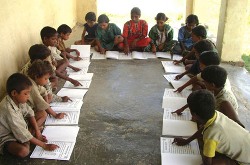
HRD Minister Kapil Sibal described it as "harbinger of a new era" for children to meet the challenges of the 21st century. He said the Bill is a "historic opportunity" for providing better future to children of the country as there was never such a landmark legislation in the last 62 years since independence. "We as a nation cannot afford our children not going to schools," he asserted, noting that the measure details the obligations of the Centre and the states for providing free and compulsory education to children.
The Bill also seeks to do away with the practice of schools taking capitation fees before admission and subjecting the child or parents to any screening procedure.  Sibal said it would be up to the states to implement the policy of reservation in admissions. Responding to members' concern on the financial requirement of the gigantic task, he said a group was on the job which would provide inputs to the 13th Finance Commission before completion of its term in October this year.
He said that minority education institutions should also focus on giving education to those disadvantaged within the community.
The Bill seeks to achieve ten broad objectives which include free and compulsory education, obligation on the part of state to provide education, nature of curriculum consistent with Constitution, quality, focus on social responsibility and obligation of teachers and de-bureaucratisation in admissions.
The biggest challenge staring at the central and state governments in the implementation of the law, however, is the funding for the mechanisms and structures the act demands.
The government has arrived at a figure of Rs 1,71,000 crore over the next five years — an amount that states have to share with the Centre.The HRD ministry plans to approach the cabinet with a proposal for a 65:35 funds sharing ratio between the Centre and the states. The Centre will bear 90 per cent of the financial burden for the northeastern states.
States have objected to this fund-sharing proposal. Most states are refusing to shell out more than 10 per cent of the expenditure.

Hailed By all

 Child rights campaigners have hailed the act, but they also point out that many challenges lie ahead in turning the legal right into a reality.
UNESCO, ILO and UNICEF today joined forces in applauding the ground-breaking Right to Education Act, legalising the right to free and compulsory education for all children between the ages of 6 and 14 in India. "Tens of millions of children will benefit from this initiative ensuring quality education with equity," said Karin Hulshof, UNICEF Representative in India. "RTE will propel India to even greater heights of prosperity and productivity for all guaranteeing children their right to a quality education and a brighter future."  

The Challenges?

One of the greatest challenges will be making enough trained teachers and facilities available in state-run schools, especially in rural areas. According to estimates, more than a million more new teachers will be needed.
 Creative and sustained initiatives are crucial to train more than one million new and untrained teachers within the next five years and to reinforce the skills of existing teachers to ensure child-friendly education. Bringing eight million out-of-school children into classes at the age appropriate level with the support to stay in school and succeed poses a major challenge. Substantial efforts are essential to eliminate disparities and ensure quality with equity.
Families and communities also have a large role to play to ensure child-friendly education for each and every one of the estimated 190 million girls and boys in India who should be in elementary school today. School Management Committees, made up of parents, local authorities, teachers and children themselves, will need support to form School Development Plans and monitoring. The inclusion of 50 per cent women and parents of children from disadvantaged groups in these committees should help overcome past disparities.And educated boiling blood young dudes should take an active part in such committees.  
how different our life would have been had we not been educated? difficult to imagine, isn't it . We all come across downtrodden children doing all sort of  labour  in front of our eyes every day , but we all ignore as we are very busy with our own life, and we all feel that we can't do anything in this matter  - but why not do something different rather than just ignoring  - why not we  voice out for these ignored beings , why not we fight for their education, and if you have enough money why not sponsor a child's education - ofcourse 99 % of the time no one will hear us  - but that 1 % success is more than enough ...........

YOUTH EMPOWERMENT


he concept and term of empowerment has been in vogue for quite some time. Different people have tried to explain this concept in different ways, but the point is that we have to fix it. Keeping the concept vague may serveindividual purposes. But concretisation too has its dangers. Here I must begin with my own experience of working with people in my organization. My organization called Nehru Yuva KendraSangathan (NYKS) is a body of the Ministry of Youth Affairs that has a country –wide network of 500 offices in as many districts and a quarter million village level youth bodies called youth clubs. Many of these youth bodies show good sustainable signs of institutions. Many others  exhibit episodic-institution-like qualities. The question of Empowerment and Development- as concepts and practice, specially in the contexts of youth and adolescents, have always been in the fore front of our concern and working. Therefore NYKS has no intention of keeping a popular and oft-quoted concept in a fluid state of understanding and individualusefulness. One may find a concept too rigid in a certain context where the available parameters and social imperatives can be prohibitive to follow the concept to its pristine meaning and  application. Many have defined the term in the older vein of giving and receiving power; or in the manner of much celebrated laissez faire type of inclusion of the poor; that is, trickle down of power in the manner the economy has trickled down to the poor and is desperate to take them above the poverty line (!!). But it is not yet visible. Some have taken the term to mean a stage of creating wherewithal for applying choice mechanism with the newly empowered person. However, universalization of a concept in a rigid form may not serve the purpose of its universal application in various cultural, economic and political contexts. For our purpose of defining empowerment as a concept and then testing its applicability on our different programmes, we cite below the learning points from three case studies—all of which belong to the knowledge and intervention areas of our mandate and related work:-
Case Study no. 1:
Different people- officers and workers were asked what they meant by the term when they used this in their contexts of work. Various things were said. By and large, reducing their statements and contents in short clauses we get to know the following understanding of the term “empowerment”:-
1.1.    Giving the subject of the exercise of empowerment, certain power to do what he wants to do;
1.2.    Upgrading his skills so that he is confident and is skilled to make his life better;
1.3.    Power means strength, therefore empowerment means strengthening a person with various qualities and skills;
1.4.    Empowerment means enabling a person for making sound decisions about himself;
1.5.    Investing some authority in the person being empowered;
1.6.    Empowerment is creation of choices and making people aware about those choices and to enable them to make use of those (Definition offered by Commonwealth Youth Programme).

Case Study no. 2:-
NYKS records from its field of 2,50,000 youth clubs, the following observations which will help in defining the concept in an empirical and categorical situation:-
1.    Community and Family are the basic and strongest units of behaviour formation for an individual. We see it happening in a routine way of our dealing with the working of a youth club;
2.    Understanding of one’s status and the connected role within the family and the immediate community is seen to be the fundamental marker for accepting, rejecting or modifying behaviour;
3.    Politics, more than governance is perceived to be the carrier of power to make changes or of obtaining certain advantages. Politics also is perceived to be a force for dealing with macro level religious, cultural and classificatory issues that shape or change shapes of identity;
4.    Youth club is a new institution and is perceived (by its members and the community) to be associated with the values of education, modernity, volunteerism and idealism. Youth Club as an institution has a friend in the institution of Panchayat. There exists a continuum between a youth club and the village Panchayat. And this is one reason that has not allowed the youth club movement to catch high speed and shape. History and politics have not helped the Panchayati Raj system as much as the latter deserved or demanded. Youth Club movement gets rub of this betrayal. An institution when finds no space for expansion tends to go convoluted or it shrinks. This is what is happening with youth clubs. To an extent they form themselves, they grow, and finding no space to expand, or to transform, they like the yellow smoke in a melancholic café curl once about the house and fall asleep.
5.    In the tribal areas mostly, the youth club serves as solidarity of the tribe behind the young persons who are members of the youth club in the village. In multi-ethnic or multi-tribe villages, as in Manipur, each ethnic group has its own youth club. So a village in Manipur may have several clubs, each belonging to a different tribe and ethnic group. Here, the youth club serves the purpose of asserting and strengthening identity of theethnic group within the larger village community that is plural in nature but is bound together by a contract of living together. Similarly, in a multi-caste village, where the population of backward caste/s or of the scheduled caste is dominant, the latter tend to have a separate youth club for the obvious reasons of inclusion-exclusion principles of castes or/and when that is not an issue, then because of the reasons of emerging exclusive leadership in the dominant groups of “backward”  castes.
6.    Except for some cases (when the youth club  is not transformed into a CBO or an NGO) when a youth club is “given” a programme of youth development or the community development by the NYK or by a sponsoring agency, it generally behaves like a reserved force, and exhibits nature of an episodic institution.
7.    Teen clubs are still very young and are formed for the adolescents. Their fate is invariably linked with the youth clubs so far as long-term sustenance is concerned. However, in the context of learning and participation of their members, the teen clubshave started off well.
Case Study no. 3:-
Under the National Service Volunteer Scheme (NSVS) of the Ministry of Youth Affairs and Sports, about 5000 young persons are selected every year as National Service Volunteers (NSVs) and are put to work in the network of 500 district level NYKs in the country. They are given formal and institutionalised training in three phases, which cumulatively comes to 28 days. They are deployed in the NYKS field to work along with youth clubs or the NYKs in all fields of its work ranging from preparation of a small-time guideline for a youth club to being a member of the task force for organizing a mega event like National Integration Camp or a special programme like the great march of 2007 in memory of 1857 war of independence. We have the following feed back from their working in the field:-
1.    Not all of them show individual strengths and aptitude for service to the people; but those who recognize their individual strengths quite early and build on those strengths; they succeed in creating certain niche for themselves in the community. After they have finished their tenure of mostly two years they:-
1.1.Enter into sustained relationships with the NYK; the network of youth clubs they had served in the tenure of their volunteer ship; political network of    local and bigger political leaders; and a particular youth club whom they turn into a Community Based Organization or an NGO;
1.2.    They keep improving their individual strengths in terms of leadership, personality up-gradation, communication skills and personal charm or assertiveness;
1.3.    They are not static. They show a lot of practising physical mobility, within the village or the community in terms of leadership in society at large; and,
1.4.    Earn money, and name, and many times certain political post at different levels of the PRIs or the legislature etc. They “feel” successful, and are considered by their immediate society as successful.
2.    Many times, the youth club leaders and the active NSVs get in close cooperation with each other and they behave in a similar manner. This is natural in view of the fact that they grow in similar circumstances, opportunity-structures and guidance.
3.    When they prefer to find a job, they get settled in the job. But when they get into a selected role of leadership, the process of their hold over the community keeps alive.

ORGANIC FARMING IN INDIA


Organic agriculture is a holistic production management system that promotes the health of the agro-ecosystem related to biodiversity, nutrient biological cycles, soil microbial and biochemical activity.
Biodynamic farming  is a principal of organic farming where chemical fertilizers are replaced by microbial nutrient givers like algae, fungi, bacteria, micorhiza and actinomycetes. Biological pest management is the process of using the natural predators of pests like birds and parasites instead of chemical pesticides. Composting, green manuring, crop rotation, mixed cropping, bird perches and trap crops are other principles of organic farming. The Indian Council of Agricultural Research and the Department of Agriculture and Cooperation are involved in promoting organic farming in India
Organic manure covers manure made from cattle dung, excreta of other animals, rural and urban composts, other animal wastes, crop residues and green manures. This is how these wastes are useful in improving the fertility and productivity of soils:
  • Cattle dung leads to soil porosity, excreta from other animals betters the water stable aggregates.
  • Rural and urban compost improves the water holding capacity of the soil.
  • Other animal wastes betters the infiltration rate.
  • Crop residues and green manures improve hydraulic conductivity.
Most farmers choose to use farmland manure because it is commonly available. Other advantages are its ability to improve the soil, tilth and aeration, increase the water holding capacity of the soil and stimulate the activity of microorganisms that make plant food elements in the soil.
Composting is the process of reducing vegetable and animal waste to a quickly utilizable condition. This is done through the action of microorganisms on the wastes. These wastes may include leaves, roots, stubbles, crop residues, straw, hedge clippings, weeds, water hyacinth, saw dust, kitchen wastes and human habitation wastes. The waste materials undergo intensive decomposition under medium-high temperatures in heaps or pits with adequate moisture for around 3-6 months. The finished compost is an amorphous, brown to dark brown mix of humified materials.
There are basically two types of composting - Aerobic and Anaerobic.
In Aerobic compositing, the used bedding of cattle, the sweeping from cattle sheds and some urine soaked earth from the stable floor are removed every day. This is mixed with cattle dung and two or three handfuls of wood ash and is deposited on a well-drained site. Gradually a low pile of around 30 to 45 centimeters in height forms. The pile in built up before the start of the rainy season. After the first heavy showers, the welted material in a 1.2 metre strip of each side is turned with a rake on to a 2.4 metre wide strip in the middle, thus raising the height of the heap to nearly 1 metre. This process prevents a loss of moisture and ensures a quick start to decomposition. When the heap sinks after three to four weeks, it is given a second turning and made into a fresh heap by mixing outside material with that from inside. After about a month or more, depending on the amount of rain, the heap is given a final turning on a cloudy day. The compost can be put to use after around four months.
In Anaerobic Composting, the farm residues are collected in pits of a convenient size, say around 4.5 metres X 1.5 metres X 1 metre. Each day’s collection is spread in a thin layer, sprinkled with a mixture of fresh cow dung (4.5 kgs), ash (140 to 170 gms) and water (18 to 22 litres). This is then made compact. The pit is filled till the raw material stands 30 to 46 centimeters above its edge and is then plastered with a mixture of mud and cow dung. The compact moist materials become compost in about four to five months without any further attention. This compost usually contains around 0.8 to 1 per cent of nitrogen.
Green manuring involves the cultivation of leguminous plants that are used due to their symbiotic nitrogen or N fixing capacity. In some areas, non-leguminous plants may also be used due to their local availability, drought tolerance, quick growth and adaptation to adverse conditions.
The best green manure should possess the following traits:
  1. Show early establishment and high seedling vigour
  2. Be tolerant to drought, shade, flood and adverse temperature
  3. Possess early onset of N fixation and its efficient sustenance
  4. Have an ability to accumulate large bio mass and nitrogen in 4-6 weeks
  5. Is easy to incorporate
  6. Is quickly decomposable
  7. Is tolerant to pest and diseases
In Madhya Pradesh, organic farming is being implemented under the guidance of a team of experts comprising scientists, environmentalists and food management personnel in 1565 villages. Nutrients to the crops are provided through green manuring, composts, phosphocomposts and fermented preparations prepared from cow dung and urine. Pests are managed through the use of neem and cow urine based fermented preparations. Eight different ways of composting are recommended in Madhya Pradesh. They are the Indore method, nadep compost, nadep phospho compost, vermi compost, bhabhut amrit pani, amrit sanjeevani, pitcher khad, biogas slurry, green manures and bio fertilizer.

Economic development in India


The economic development in India followed a socialist-inspired policies for most of its independent history, including state-ownership of many sectors; extensive regulation and red tapeknown as "Licence Raj"; and isolation from the world economy. India's per capita income increased at only around 1% annualized rate in the three decades after Independence.Since the mid-1980s, India has slowly opened up its markets through economic liberalization. After more fundamental reforms since 1991 and their renewal in the 2000s, India has progressed towards a free market economy.
In the late 2000s, India's growth has reached 7.5%, which will double the average income in a decade. Analysts say that if India pushed more fundamental market reforms, it could sustain the rate and even reach the government's 2011 target of 10%. States have large responsibilities over their economies. The annualized 1999-2008 growth rates for Gujarat (9.6%), Haryana (9.1%), or Delhi(8.9%) were significantly higher than for Bihar (5.1%), Uttar Pradesh (4.4%), or Madhya Pradesh(6.5%). India is the eleventh-largest economy in the world and the fourth largest by purchasing power parity adjusted exchange rates (PPP). On per capita basis, it ranks 128th in the world or 118th by PPP.
The economic growth has been driven by the expansion of services that have been growing consistently faster than other sectors. It is argued that the pattern of Indian development has been a specific one and that the country may be able to skip the intermediate industrialization-led phase in the transformation of its economic structure. Serious concerns have been raised about the jobless nature of the economic growth. 
Favourable macroeconomic performance has been a necessary but not sufficient condition for the significant reduction of poverty among the Indian population. The rate of poverty decline has not been higher in the post-reform period (since 1991). The improvements in some other non-economic dimensions of social development have been even less favourable. The most pronounced example is an exceptionally high and persistent level of child malnutrition (46% in 2005–6).
The progress of economic reforms in India is followed closely. The World Bank suggests that the most important priorities are public sector reform, infrastructure, agricultural and rural development, removal of labor regulations, reforms in lagging states, and HIV/AIDS. For 2010, India ranked 133rd in Ease of Doing Business Index, which is setback as compared with China 89th and Brazil 129th. According to Index of Economic Freedom World Ranking an annual survey on economic freedom of the nations, India ranks 124th as compared with China and Russia which ranks 140th and 143rd respectively in 2010.

Anna Hazare

Very few social activists have captured the attention of Indians across the globe as Anna Hazare did during his "fast unto death" over the issue of the Lokpal Bill in New Delhi in April 2011. Hazare, a Gandhian by belief, outlook and practice, has become the face of India's fight against corruption. During his fast over the Lokpal Bill, Hazare, a quintessential traditional Indian by looks and mannerism, managed to inspire and mobilize the support of even the ultra-modern Indians - Indians for whom the word "social" only means having a profile on social networking sites. The "Anna Hazare fast" can be described as the first real "social networking movement" in India. Hazare, a former Army man, began his social activism from Ralegan Siddhi, a village in Ahmednagar district in Maharashtra, where he successfully led a movement against alcoholism and made Ralegan Siddhi a "model village". Hazare's campaign was instrumental in the implementation of the Right to Information Act in Maharashtra, which is considered one of the best RTI Acts in India. A Ramon Magsaysay award winner, Anna Hazare, like his idol, Mahatma Gandhi, has triggered a debate over the use of fast as a means of protest in India. By sheer commitment and simplicity, he has demonstrated that Gandhian principles are relevant even in the 21st-century India.


Recent News
Anti corruption crusader Anna Hazare on Thursday said that if union government does not implement Jan Lokpal bill before August 15, a nationwide Jail bharo andolan will be initiated from August 16.